DIY Divorce in Florida: What You Need to Know Before You Start
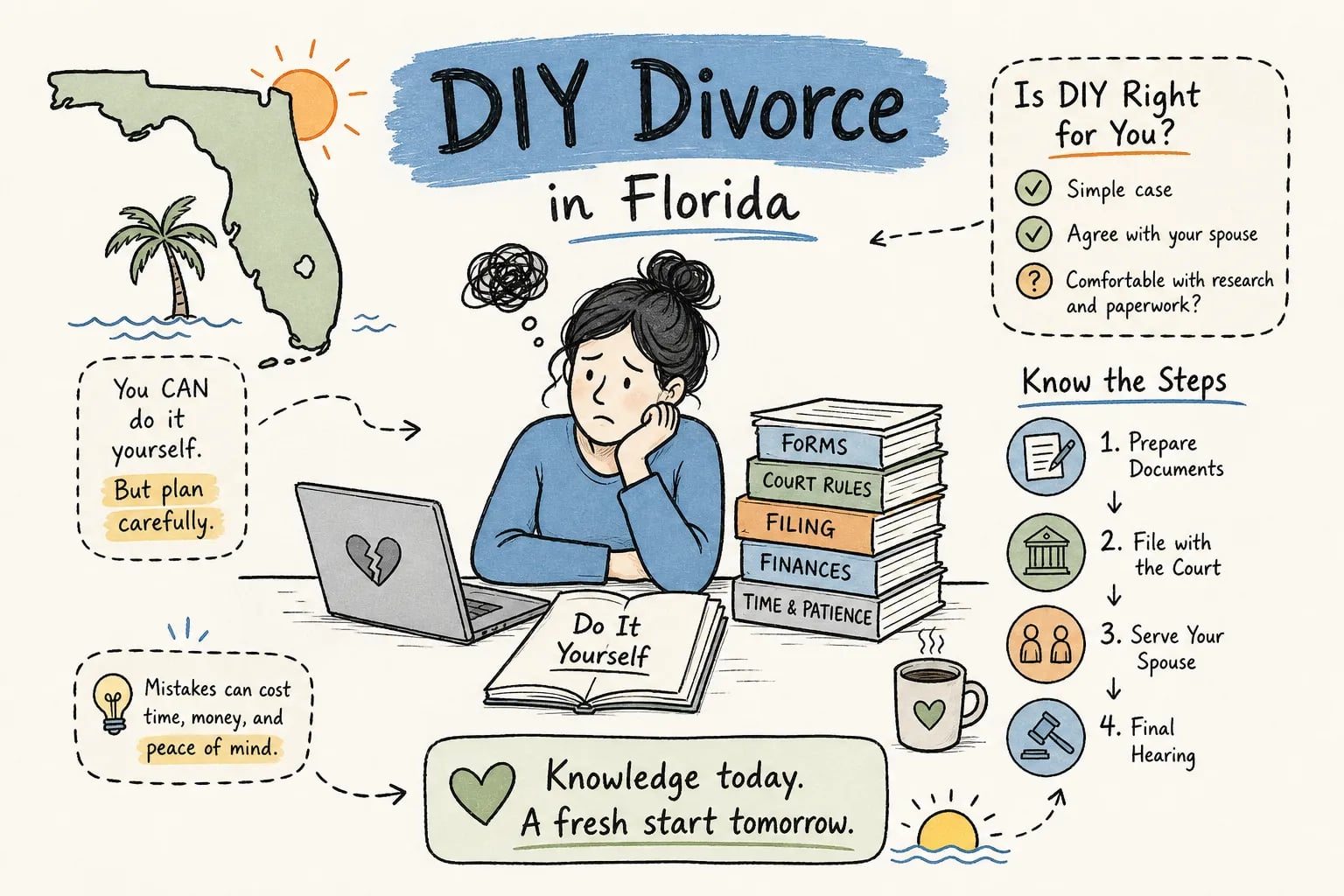
Thousands of Floridians complete a DIY divorce in Florida every year without hiring an attorney, and the Florida court system genuinely supports them in doing it. But the DIY path, formally called a pro se or self-represented filing, is not the same as filling out a simple form and mailing it in. The process involves specific petitions, county-level procedures, a mandatory waiting period, and an e-filing portal that takes some navigation to understand. Getting any of those pieces wrong means delays, rejected filings, and sometimes starting over.
This is exactly the gap that Divorce Harmony, led by licensed attorney and Florida Supreme Court Certified Mediator Dori Shwirtz, was built to address. For people who want to skip the $10,000 attorney bill but still need everything done correctly, there is a middle path. This article walks through what the DIY divorce process in Florida actually looks like so you can decide which route fits your situation.
Who actually qualifies for a DIY divorce in Florida
Before you open a single form, you need to know which type of divorce you’re eligible for. Not every couple qualifies for the same path, and choosing the wrong one wastes time and money.
The 6-month residency rule you can’t skip
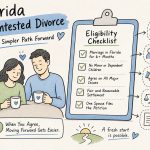
At least one spouse must have lived in Florida for six consecutive months before filing, whether you’re pursuing a simplified dissolution or a standard uncontested divorce. Courts accept a Florida driver’s license, Florida ID card, voter registration card, or a corroborating witness as proof. Without this, your filing won’t move forward regardless of how well-prepared your paperwork is.
Simplified dissolution vs. standard uncontested: what’s the difference
Simplified dissolution is the narrower of the two paths. To qualify, there must be no minor or dependent children, there must be no current pregnancy, neither spouse can request alimony, and both spouses must fully agree on all property and debt division. Both parties are also required to appear together at the final hearing in person. Standard uncontested divorce is broader: it can include minor children, parenting plans, and shared property as long as both spouses have reached a complete agreement on the terms before filing.
When children or assets push you toward the uncontested process
If your marriage involves minor children, a parenting plan, child support obligations, or significant shared assets, simplified dissolution is not available to you. The standard uncontested path covers those situations, but it requires more forms and more steps. Knowing this upfront saves you from filing under the wrong process and having to start over.
The Florida divorce forms you’ll actually need
Florida provides Supreme Court-approved forms at no charge through the Florida State Courts self-help pages. The specific forms you need depend on whether children are involved and whether you have shared property.
Core forms that every dissolution filing requires
Every dissolution of marriage filing starts with the right petition from the 12.901 series:
- Form 12.901(a), simplified dissolution
- Form 12.901(b)(1), cases involving minor or dependent children
- Form 12.901(b)(2), cases with property but no minor children
- Form 12.901(b)(3), cases with no children and no property
Beyond the petition, every case also requires a Financial Affidavit (Form 12.902(b) for income under $50,000, or Form 12.902(c) for income at or above $50,000), the Notice of Social Security Number (Form 12.902(j)), and the Cover Sheet for Family Court Cases (Form 12.928).
Extra forms when children are part of the divorce
Divorces involving minor children require four additional forms that are not optional:
- Uniform Child Custody Jurisdiction and Enforcement Affidavit (Form 12.902(d))
- Child Support Guidelines Worksheet (Form 12.902(e))
- Parenting Plan (Form 12.995(a))
- Marital Settlement Agreement with children (Form 12.902(f)(1))
Submit a filing without any of these and the clerk will reject it, full stop.
Where to download the official Florida divorce forms
The Florida State Courts self-help website provides all Supreme Court-approved forms as downloadable PDFs at no cost. County clerk websites are also worth checking, because many counties publish case-specific packets that bundle the correct forms together based on your situation. Those packets are often faster to work with than hunting down each form number individually from the state site.
How to file a DIY divorce in Florida: portal setup and e-filing steps
DIY Florida is a guided interview tool built into the Florida Courts E-Filing Portal. It generates your forms based on your answers and then routes you into the e-filing workflow. Most pro se filers who stall here do so because they haven’t set up their portal account first.
Setting up your portal account before you file
You need an active Florida Courts E-Filing Portal account before you can access the DIY Florida tool. Create an account, activate it, and select the self-represented litigant role. Without that role designation, the DIY Documents section won’t be visible. It’s a five-minute step that many filers skip, only to find themselves locked out when they’re ready to start.
What the DIY Divorce in Florida interview actually does
Once you’re inside DIY Florida, you select the correct interview for your case type, simplified dissolution or dissolution with dependent or minor children. The tool asks questions in plain language and uses your answers to populate the official court forms automatically. It reduces the chance of selecting the wrong form version, but it does not verify whether your answers are accurate or catch every case-specific requirement. That said, you’re still responsible for the accuracy of what goes into each field, the tool fills in the forms, not your judgment.
Submitting the completed documents through the portal
After the interview generates your forms, the portal routes you into the filing workflow. You select your county, choose whether you’re initiating a new case or filing in an existing one, attach supporting documents, and pay the filing fee through the portal. One practical note: some Florida courts want all attachments bundled in a single file with the lead document rather than uploaded separately. Check your county clerk’s guidance before you submit.
What it costs and how long it takes
Planning for both the financial and time commitment helps you manage expectations and avoid surprises after you’ve already filed.
Filing fees and what else you’ll pay out of pocket
The standard dissolution of marriage filing fee runs approximately $408 to $409 in most Florida counties, with a $10 summons fee added in some. Orange County charges $408; Broward, Miami-Dade, and Palm Beach charge $409. If you need service of process, certified copies, or have to reopen a case, the total can reach $450 to $600. The DIY Florida interview tool itself is free, the fees go directly to the court.
The mandatory 20-day waiting period
Florida law requires at least 20 days to pass between the date of filing and the entry of a final judgment. For simplified dissolutions, the full process typically wraps up in 30 to 45 days. Standard uncontested divorces usually take 4 to 12 weeks, and busier courts can push that to 2 to 4 months. The timeline after the 20-day period depends on how quickly paperwork is complete and when the court can schedule a final hearing.
DIY Divorce in Florida costs vs. hiring a traditional attorney
The numbers are straightforward: a DIY filer typically pays $408 to $600 total. A simple uncontested divorce handled by an attorney usually starts around $2,000. Contested cases routinely reach $5,000 to $20,000 or more. The cost difference is real, but so is the time and accuracy required to handle the process yourself without error.
Mistakes that derail most DIY divorces in Florida
These aren’t edge cases. They’re the patterns that show up repeatedly in Florida courts when self-represented filers run into trouble.
Choosing the wrong petition form for your situation
Filing Form 12.901(b)(3), the no-children, no-property petition, when you actually have minor children is one of the most common errors. The clerk will reject the filing entirely. Progress resets, fees are not automatically refunded, and you have to refile correctly. This happens when filers choose a form based on the number alone without reading the eligibility criteria attached to it.
Incomplete or incorrectly notarized financial affidavits
Florida requires a notarized financial affidavit in most dissolution cases. Submitting one that is unsigned, unnotarized, or filed on the wrong version, for example, using Form 12.902(b) when your income exceeds $50,000, delays the final judgment. This is one of the most frequently cited errors in pro se Florida divorce filings, and it’s entirely avoidable with careful preparation.
Overlooking county-specific procedures
Florida’s clerks operate at the county level, and each one has its own fee schedule, preferred filing format, and sometimes additional local forms or cover sheets. What satisfies Miami-Dade’s clerk may not meet Hillsborough’s requirements. Before you submit anything, check your specific county clerk’s website for current local requirements. The statewide forms are a starting point, not the complete picture.
Why many Floridians choose Divorce Harmony instead
Doing a DIY divorce in Florida is a legitimate option for couples who qualify and are willing to do the work carefully. But it’s not the only affordable path, and for many people it’s not the lowest-risk one either.
What professional document preparation actually covers
Dori Shwirtz is a licensed attorney and Florida Supreme Court Certified Mediator who handles document drafting and e-filing personally for every Divorce Harmony client. Forms are prepared and submitted within 48 hours of payment. This is one-on-one attention from someone who knows exactly which petition applies to your case, which county’s requirements apply, and which supporting forms are required, not a document-generation service where you’re on your own if something gets flagged.
The no-court-appearance, fully online process
Simplified dissolution requires both spouses to appear together at a final hearing. Divorce Harmony’s process is entirely remote: documents are prepared, filed, and notarized online. An online notary service is available directly through the platform, and clients anywhere in Florida can complete the entire process without stepping into a courthouse. For working professionals or couples in different locations, that flexibility makes a real difference.
Flat-rate pricing and a realistic 30-day timeline
Divorce Harmony offers professional document preparation and e-filing at a flat rate, not an attorney retainer with unpredictable hourly billing. Most cases finalize in approximately 30 days. For couples who want the cost efficiency of handling things outside of traditional legal representation, without the risk of a rejected filing or a missed form, that combination of price, speed, and professional oversight is worth considering. A free initial consultation is available to confirm eligibility before any commitment is made.
Start with complete information, then decide
A DIY divorce in Florida is genuinely achievable for couples who qualify, know their forms, and follow county procedures without cutting corners. The court system provides real support through tools like the DIY Florida interview and MyFLCourtAccess, and for straightforward cases, self-represented filing works. The requirement is patience, accuracy, and a willingness to dig into the details before submitting anything.
For couples who want that same cost efficiency without the paperwork risk, Divorce Harmony offers a direct alternative: professional document preparation and e-filing at a flat rate, fully online, with no court appearance required. Schedule a free consultation at Divorce Harmony to find out which path fits your situation.
Frequently Asked Questions About DIY Divorce in Florida
Who qualifies for a DIY divorce in Florida?
At least one spouse must have lived in Florida for six consecutive months before filing -- beyond that, eligibility depends on whether you qualify for simplified dissolution (no minor children, no pregnancy, no alimony request, full agreement on property and debt) or the broader standard uncontested path, which allows for children and shared property as long as both spouses agree on all terms first.
What's the difference between simplified dissolution and standard uncontested divorce?
Simplified dissolution is the narrower path -- no minor or dependent children, no pregnancy, no alimony, full agreement on property, and both spouses must appear together at the final hearing in person -- while standard uncontested divorce covers cases involving children, parenting plans, and shared property as long as both spouses have already reached a complete agreement.
What forms do I need to file a DIY divorce in Florida?
Every filing starts with a petition from the 12.901 series, plus a Financial Affidavit, a Notice of Social Security Number, and a Cover Sheet for Family Court Cases -- divorces involving minor children require four additional forms, including a Parenting Plan and Child Support Guidelines Worksheet, and missing any required form typically gets a filing rejected by the clerk.
How much does a DIY divorce cost in Florida compared to hiring an attorney?
A DIY filer typically pays $408 to $600 total in court fees, while a simple uncontested divorce handled by an attorney usually starts around $2,000, and contested cases can reach $5,000 to $20,000 or more.
How long does a DIY divorce take in Florida?
Florida law requires at least 20 days between filing and final judgment -- simplified dissolutions typically wrap up in 30 to 45 days, while standard uncontested divorces usually take 4 to 12 weeks, and busier courts can push that to 2 to 4 months.
What are the most common mistakes that derail a DIY divorce filing?
The most frequent errors are choosing the wrong petition form for your situation, submitting an incomplete or incorrectly notarized financial affidavit, and overlooking county-specific procedures -- since Florida's clerks operate at the county level, what satisfies one county's requirements may not meet another's.
Is there a lower-risk alternative to filing a DIY divorce myself?
Yes -- Divorce Harmony, led by licensed attorney and Florida Supreme Court Certified Mediator Dori Shwirtz, offers professional document preparation and e-filing at a flat rate, fully online, with no court appearance required, and most cases finalize in approximately 30 days.